
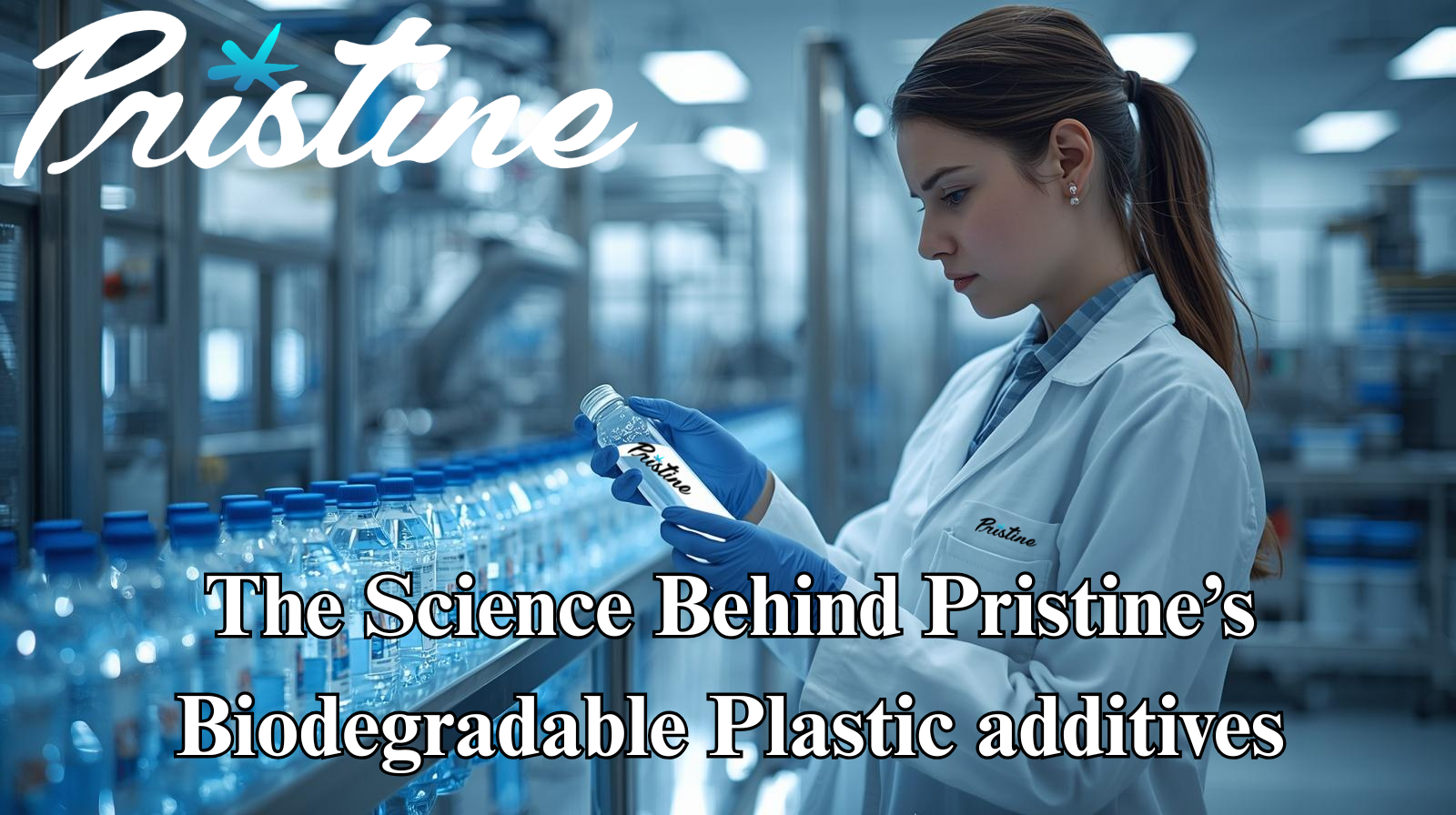
The Science Behind Pristine’s Biodegradable Plastic Additives
🌱 What Pristine Is
Pristine is a proprietary biodegradable plastic additive that manufacturers blend into traditional polymers. It’s designed to make those plastics biodegrade much more quickly in real-world disposal environments like landfills and oceans — without requiring new machinery or changing how the plastic performs before disposal.
🔬 How It Works: The Science Behind the Additive
The core scientific mechanism involves enhancing microbial biodegradation of the polymer:
✅ Biofilm Attraction & Microbial Activity
The additive promotes the formation of a biofilm — a layer of microbes — on the surface of the plastic once it enters a microbe-rich environment like a landfill or the ocean. Microbes are then able to attach more easily and begin consuming the material.
✅ Quorum Sensing & Polymer Breakdown
Once microbes attach, they use quorum sensing (biological signaling) to recruit more microbes. These organisms produce enzymes that break polymer chains into smaller molecules that can be digested. The plastic is gradually metabolized into natural substances like CO₂, water, and microbial biomass rather than lingering for centuries.
✅ No Change to Performance Before Disposal
Importantly, the additive doesn’t make the plastic weaker or start degrading while it’s being used. Its activity kicks in primarily once the item is disposed into an environment where microbial communities are active.
🧪 Scientific Validation
Pristine’s performance has been tested using ASTM standard biodegradation tests (such as ASTM D5511, D5338, and D6691), demonstrating enhanced degradation rates compared to untreated plastics in landfill, composting, and marine contexts.
📦 Compatibility & Practical Integration
One advantage of Pristine’s additive is that it can be added at low concentrations (around ~1%) during manufacturing and works with many common plastics like PE, PP, PVC, PET, Nylon, GPPS and more — all without retooling existing production lines.
♻️ How It Fits With Sustainability Goals
Supports recycling first — if the plastic is recycled, the additive doesn’t interfere.
Acts as a biodegradation safety net for plastics that aren’t recycled.
Helps reduce long-term environmental persistence of plastics compared with untreated materials.
🧠 Why This Matters
Traditional plastics can take hundreds of years to break down because their long polymer chains resist microbial digestion. Pristine’s science bridges that gap by making plastics biologically approachable for microbes once discarded, helping accelerate decomposition in environments where untreated plastics would otherwise persist.